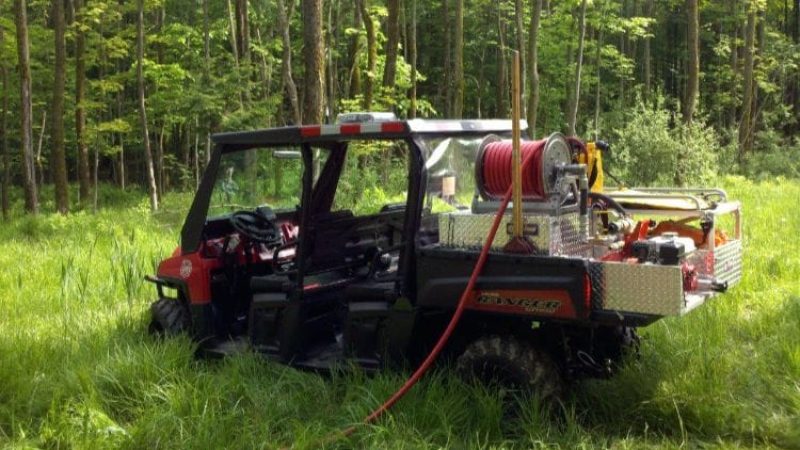
Ground clearance and center of gravity stability directly impact how an EMS ATV performs across off-road environments in the United States. These two factors shape how well off-road emergency vehicles handle obstacles, maintain traction, and reduce vehicle rollover risk during real-world operations. Balancing these elements is critical when configuring an ATV with an ATV rescue skid, especially when transporting patients and equipment across uneven terrain.
How Ground Clearance Affects Off-Road Performance
Ground clearance determines how easily an ATV can pass over obstacles without damaging components. Higher clearance improves access in rugged environments, but it also introduces tradeoffs that affect stability.
- Obstacle Clearance Limits: Higher clearance allows operators to move over rocks, debris, and uneven terrain without contact.
- Uneven Terrain Response: Increased clearance improves performance in rutted or irregular surfaces.
- Undercarriage Protection: Additional height reduces the risk of damage to critical components.
- Suspension Geometry Impact: Changes in ride height affect how the suspension responds under load.
Why Center Of Gravity Drives Stability
Center of gravity stability plays a central role in emergency ATV stability. A lower center of gravity improves balance and reduces tipping risk, especially during turning, braking, and slope operation.
As load height increases, stability decreases. Equipment placement, patient positioning, and skid design all influence how the ATV behaves under real conditions. Proper setup ensures the vehicle remains predictable and controlled, even when conditions change quickly.
How Load Height & Patient Positioning Change Vehicle Behavior
Adding a patient and equipment raises the center of gravity and changes how the weight is distributed across the ATV. This directly affects braking, turning, and traction.
- Load Height Impact: Elevated loads increase instability and reduce the margin for error on slopes.
- Patient Load Positioning: Centered and low positioning improves balance and reduces shifting.
- Skid Mounting Height: Lower mounting positions help maintain a stable center of gravity.
- Dynamic Weight Transfer: Movement during transport affects handling and control.
Wheelbase & Track Width Influence Stability
Vehicle geometry plays a major role in how an ATV responds under load. Wheelbase and track width both contribute to overall stability and control.
A wider stance improves lateral balance, while a longer wheelbase supports smoother handling across uneven terrain. These factors work together to reduce tipping point analysis thresholds and improve performance under stress. Well-matched geometry supports safer operation without sacrificing maneuverability in tight or technical environments.
Slope Operation Limits & Side Hill Stability
Operating on slopes introduces additional risk, especially when carrying a patient. Understanding slope operation limits helps operators avoid conditions that exceed safe handling thresholds.
- Side Hill Stability: A lower center of gravity improves control when traversing across slopes.
- Tipping Point Analysis: Operators must recognize angles where rollover risk increases.
- Braking Distance Awareness: Downhill travel increases stopping distance, especially on loose terrain.
- Traction Variability: Surface conditions directly affect stability and control on inclines.
Off-Road Vehicle Dynamics Require Active Control
Off-road vehicle dynamics change constantly based on terrain, load, and operator input. Stability is not fixed. It depends on how the operator responds to conditions in real time.
Operators must adjust speed, body position, and route selection to maintain control. Training plays a key role in understanding how these variables interact, especially when carrying a patient. Consistent handling improves safety and reduces the likelihood of sudden instability events.
Finding The Right Balance Between Clearance & Stability
There is no single ideal setup for every situation. Higher ground clearance improves access, while a lower center of gravity improves stability. Effective configurations balance both based on mission requirements.
Departments must evaluate terrain type, response conditions, and patient transport needs when selecting equipment. Skid systems like FIRELITE, MEDLITE, and LEOLITE allow teams to configure their ATV setups to match real operational demands.
The goal is to maintain center of gravity stability without limiting the ability to navigate obstacles.
Build Safer Off-Road Response Setups With Kimtek Corporation
Ground clearance and center of gravity tradeoffs directly affect safety, control, and response effectiveness. A well-configured EMS ATV improves performance across challenging terrain while reducing rollover risk and improving patient transport outcomes.
Kimtek Corporation designs and manufactures FIRELITE, MEDLITE, and LEOLITE skid units for demanding off-road environments across the United States. Equip your team with purpose-built solutions that balance clearance, stability, and real-world performance.