
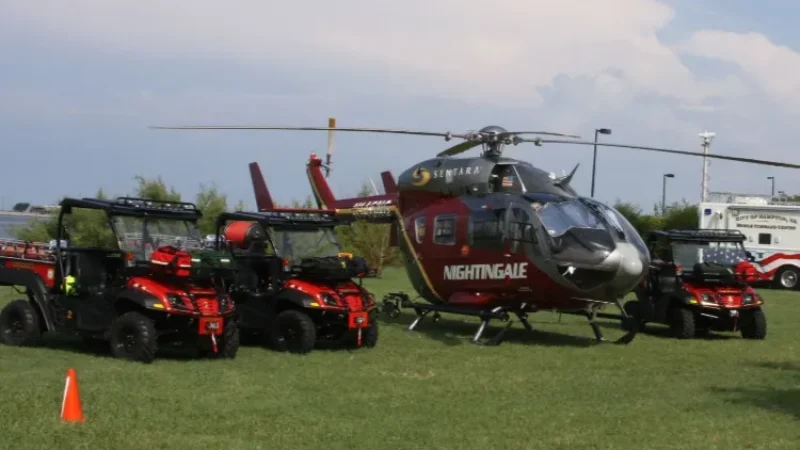
Fire skid units are essential for airport and airfield response teams to manage fires and emergencies effectively. These units provide quick deployment of firefighting equipment, making them an invaluable tool for emergency responders. In the dynamic environments of airports and airfields, the ability to respond rapidly to incidents is crucial for safety and disaster mitigation.
Understanding Fire Skid Units & Their Role In Airfield Safety
Fire skid units are a versatile tool for fire suppression and quick response in various settings. At their core, they consist of a skid-mounted fire pump, a water tank, and necessary hoses and nozzles. Designed to be mounted on utility vehicles (UTVs), trucks, or trailers, they offer flexibility and mobility, critical for airport environments. Understanding their components and functionality can significantly improve operational readiness.
- Key Components: The main components include a fire pump, water tank, hoses, and nozzles, all mounted on a skid plate.
- Versatility: Can be deployed on various vehicles, including UTVs and trucks, adapting to different terrain and situations.
- Mobility: Designed for rapid deployment and maneuverability in confined spaces like airfields.
- Durability: Built to withstand harsh conditions and continuous use, essential for emergency operations.
Types Of Fire Skid Units Designed For Airport Response
Diverse airport operations require tailored firefighting solutions. Various fire skid units cater to specific needs, formed by factors like size, capacity, and specialized functionalities. Selection depends on operational requirements and environmental conditions.
- UTV Fire Skid Units: Ideal for rapid response, these small-scale units facilitate agility and access to hard-to-reach areas.
- Slip-On Fire Skid Units: Easily attachable to existing vehicles, allowing for quick transitions and versatile applications in diverse scenarios.
- Airport Fire Skid Units: Designed specifically for airport settings, these units focus on high-capacity water tanks and powerful pumps for immediate fire suppression.
- Portable Fire Skid Units: Lightweight and transportable, these units can be stationed at strategic points for immediate use.
Advantages Of Fire Skid Units For Airport & Airfield Safety
The deployment of fire skid units provides numerous benefits, addressing specific challenges faced by airport firefighting teams. Their design and functionality cater to unique operational demands, optimizing response time and efficiency.
- Rapid Deployment: Quick installation on various vehicles ensures that teams are ready to respond instantly.
- Enhanced Mobility: Allows access to areas that larger firefighting apparatus cannot reach, crucial for airfield and runway incidents.
- Cost-Effectiveness: Offers a budget-friendly solution compared to purchasing dedicated firefighting vehicles.
- Customizable Configuration: Adaptable to specific operational needs with customizable tank sizes, pumps, and accessories.
Application Scenarios For Airport Fire Skid Units
Understanding the practical applications of fire skid units in airport settings can help tailor their use effectively. Scenarios might involve immediate response to fire outbreaks, assisting in emergency evacuations, or supporting routine safety operations. In each case, the adaptability and specialized design of skid units prove their value.
- Runway Incidents: Quick response vehicle access can contain fires from aircraft accidents or fuel spills.
- Hangar Fires: Smaller units can navigate indoor spaces to suppress fires rapidly and efficiently.
- Remote Airfield Operations: Portable units provide essential firefighting capabilities in less accessible areas without dedicated infrastructure.
- Training Exercises: Used in simulation and training exercises to prepare teams for real-world emergencies.
Comparing Fire Skid Units & Traditional Fire Trucks
While fire trucks deliver high-volume suppression capabilities, fire skid units offer unique advantages in mobility, deployment speed, and operational flexibility. Key comparison points include:
- Operational Flexibility: Skid units provide a versatile approach, adaptable for diverse situations, whereas fire trucks may face limitations in narrow or restricted areas.
- Cost & Maintenance: The lower cost and maintenance needs of skid units present cost-effective benefits compared to traditional fire trucks.
- Deployment Speed: Skid units allow for rapid deployment, especially vital in large, spread-out airport environments.
- Capacity & Power: While trucks offer higher capacity and power, skid units facilitate quicker, more immediate response for smaller-scale incidents.
FAQs About Fire Skid Units For Airports
What Vehicles Can Fire Skid Units Be Mounted On?
Fire skid units can be installed on UTVs, pickup trucks, trailers, or other emergency support vehicles equipped to manage the unit’s size and weight.
How Do Fire Skid Units Connect To Existing Fire Systems?
Units may draw from onboard tanks or integrate with onsite water systems, offering flexibility for different airport response strategies.
Are Fire Skid Units Suitable For All-Weather Operation?
Yes. Constructed with rugged materials, airport fire skid units are designed for reliable performance in varying weather conditions.
What Does Ongoing Maintenance Involve?
Routine inspections, pump testing, hose checks, and tank flushing help ensure the skid unit remains mission-ready at all times.
Strengthen Your Airfield Response With Kimtek Corporation
Kimtek Corporation provides rugged, high-performance UTV fire skids, slip-on fire skids, and airport firefighting skid units built for rapid deployment in demanding environments. With our FIRELITE series and customizable rescue skid options, airport and airfield teams can enhance mobility, safety, and operational readiness across the entire facility. Contact us today to explore fire skid solutions engineered for fast, reliable response when every second counts.