
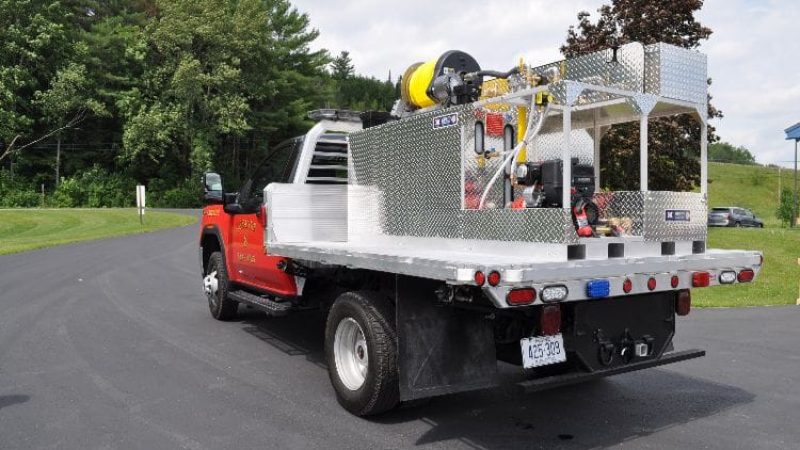
For small and rural fire departments, a 300-gallon fire skid unit strikes the perfect balance between water capacity, mobility, and cost. These compact yet powerful systems give teams the capability to fight brush fires, wildland fires, and rural structure fires without sacrificing speed or accessibility. For departments working across rugged backroads, open fields, and wooded terrain, this “sweet spot” size ensures both readiness and efficiency.
The Strategic Advantage Of 300-Gallon Fire Skid Units
A 300-gallon brush fire skid delivers the ideal mix of volume and maneuverability. It’s large enough to sustain firefighting operations but light enough to mount on standard pickup trucks, UTVs, or flatbeds. This size gives small departments the versatility that larger rigs can’t match.
- Balanced Capacity: Enough water for initial attack operations while remaining easy to refill in rural zones.
- Compact Profile: Keeps vehicles nimble across narrow roads and steep terrain.
- Flexible Deployment: Mounts easily on a wide range of off-road and service vehicles.
- Fast Setup: Arrives fully assembled for quick mounting and immediate use.
An Ideal Fit For Small Fire Departments
Small fire departments often grapple with budget constraints and logistical challenges, making the 300-gallon fire skid unit an ideal choice. This unit offers the flexibility to be mounted on various vehicles, maximizing existing resources. Additionally, its affordability and ease of use are paramount for departments handling limited personnel and equipment.
Versatility In Wildfire & Brush Fire Response
In wildland firefighting, speed and mobility often outweigh raw water volume. The 300-gallon wildland fire skid unit excels in both, allowing teams to move quickly between ignition points and hot spots.
- Remote Accessibility: Access tight forest paths, fire breaks, and brush trails with confidence.
- Efficient Water Management: Optimal tank size supports longer operations with minimal refilling.
- Quick Deployment: Skid-mounted design means your vehicle can be field-ready within minutes.
- Reliable Performance: Operates in extreme heat, dust, and slope conditions without fail.
Key Features Of A High-Quality Wildland Fire Skid Unit
A well-engineered wildland fire skid unit integrates durability, simplicity, and strength into one system. Departments should prioritize construction quality and configuration flexibility when choosing a skid.
- Skid-Mounted Fire Pump: High-pressure pumps deliver steady flow for hand lines or nozzles.
- Fire Skid Tank System: Corrosion-resistant tanks built for rugged environments.
- Reel & Hose Systems: Organized reels and controls allow precise water application.
- Compact Engine Design: Fuel-efficient engines conserve resources during long shifts.
Optimizing Off-Road Fire Skid Use In Rural Terrain
Rural departments face diverse landscapes: gravel roads, dry grasslands, and steep trails. The 300-gallon portable fire skid unit is engineered to handle them all.
- Stable Center Of Gravity: Keeps the vehicle balanced even on uneven ground.
- Lightweight Construction: Reduces vehicle strain and improves traction.
- Rapid Relocation: Quickly reposition between fire lines or access points.
- Multi-Use Potential: Adaptable for firefighting, water transport, or washdown operations.
The Power Of Skid-Mounted Fire Pumps
A skid mounted fire pump is integral to the efficiency and functionality of a 300-gallon fire skid unit. Providing strong water pressure and ample flow rates, these pumps support varied firefighting tasks while maintaining reliability under demanding conditions. A focus on durability ensures optimal performance:
- High-Pressure Output: Delivers reliable water pressure to tackle fires effectively.
- Ease Of Maintenance: Designed for minimal maintenance, reducing downtime.
- Low-Fuel Consumption: Efficient engine design conserves fuel during extended operations.
Comparison With Larger Skid Units
When compared to larger skid units, the 300-gallon unit offers unique advantages, particularly for rural applications. Larger units may provide more water capacity but often lack the maneuverability and quick deployment capabilities crucial for tackling fast-moving brush fires in challenging terrains:
- Maneuverability: Smaller size provides agility in tight and wooded areas.
- Cost-Effective: Lower initial and operating costs compared to larger units.
- Adaptability: Easily adapted to different vehicle types, enhancing operational flexibility.
Real-World Applications Across Rural Communities
Departments across the U.S. deploy 300-gallon brush fire skids for a wide range of missions:
- Wildland & Brush Fires: First-line suppression and mop-up operations.
- Agricultural Fire Prevention: Protect farm property and outbuildings.
- Rural Roadside Fires: Quick attack capability along highways and rights-of-way.
- Community Water Supply: Assist during drought or temporary water shortages.
The adaptability of these rural fire department skid units proves their value in nearly every local fire scenario.
Choosing The Right Skid Unit For Your Department
When selecting a portable fire skid unit, consider terrain, available vehicles, and personnel resources. Departments that need both power and agility consistently find that 300 gallons provides the best operational balance.
- Assess Terrain: Match unit weight to vehicle traction and slope conditions.
- Review Pump Capacity: Choose flow and pressure specs that fit your incident profile.
- Plan For Multipurpose Use: Ensure compatibility with fire suppression, washdown, or support operations.
- Think Long-Term: Prioritize quality materials that withstand corrosion and heavy field use.
Equip Your Team With Proven Fire Skid Solutions
A 300-gallon fire skid unit empowers rural and volunteer departments to respond faster, cover more ground, and protect more lives. Kimtek Corporation builds dependable, field-tested wildland firefighting skids designed for off-road performance and long-term value. Explore our FIRELITE® offerings. Equip your team with a system that delivers unmatched reliability and readiness when every minute counts.